10 July 2026 · 7 min read
First time in Uzbekistan: what actually matters
Visas are easy now, the trains are excellent, and the plov is a schedule. Ten practical truths for a first journey.
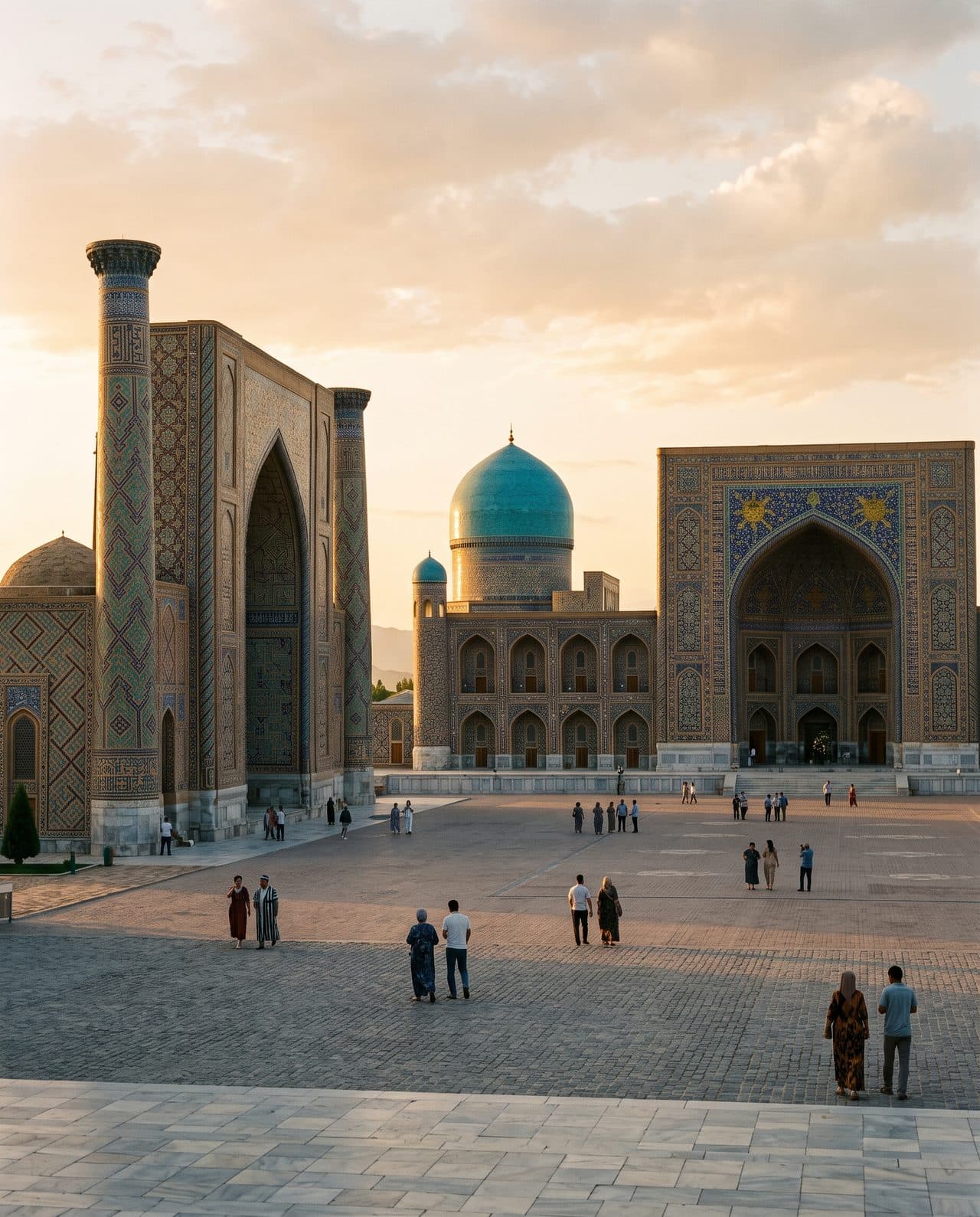
Uzbekistan spent the 2010s quietly dismantling every reason people gave for not coming. The visa queue became a website, then — for most of Europe, the UK, Japan, Korea and many others — no visa at all for stays up to 30 days. The currency black market became a bank card. The old police checkpoints became selfie stops. What remains is the easiest difficult-sounding destination on earth.
The trains are the itinerary
The Afrosiyob — Spain's Talgo running on Uzbek rails — links Tashkent, Samarkand and Bukhara at up to 250 km/h. Tashkent to Samarkand is 2h10m: shorter than most airport security lines. Book morning departures; you arrive before the heat, and the steppe out the window at sunrise is part of the show. Seats sell out days ahead in season, which is one of the quiet reasons organized journeys keep their shape.
Plov is a time, not just a dish
The national rice dish is cooked in vast kazans from dawn and served from late morning; by early afternoon the good places are scraping the crust. If someone offers you plov at 11:30, that is not early — that is correct. Samarkand layers it, Tashkent stirs it, Bukhara sweetens it with raisins, and every region will explain at length why the others are wrong.
Cash, cards and the sum
Cards now work in city hotels, supermarkets and most restaurants; bazaars, craft workshops and anywhere inside Khiva's walls still run on cash. ATMs dispense both sum and dollars. Carry more small notes than feels dignified — change is a national shortage.
Dress is easier than you fear
Uzbekistan is secular and unbothered; covered shoulders and knees at working mosques and mausoleums is the whole rulebook. A light scarf in a daypack solves every situation. Summer clothing should be loose and pale — the sun is the strictest authority you'll meet.
When to come
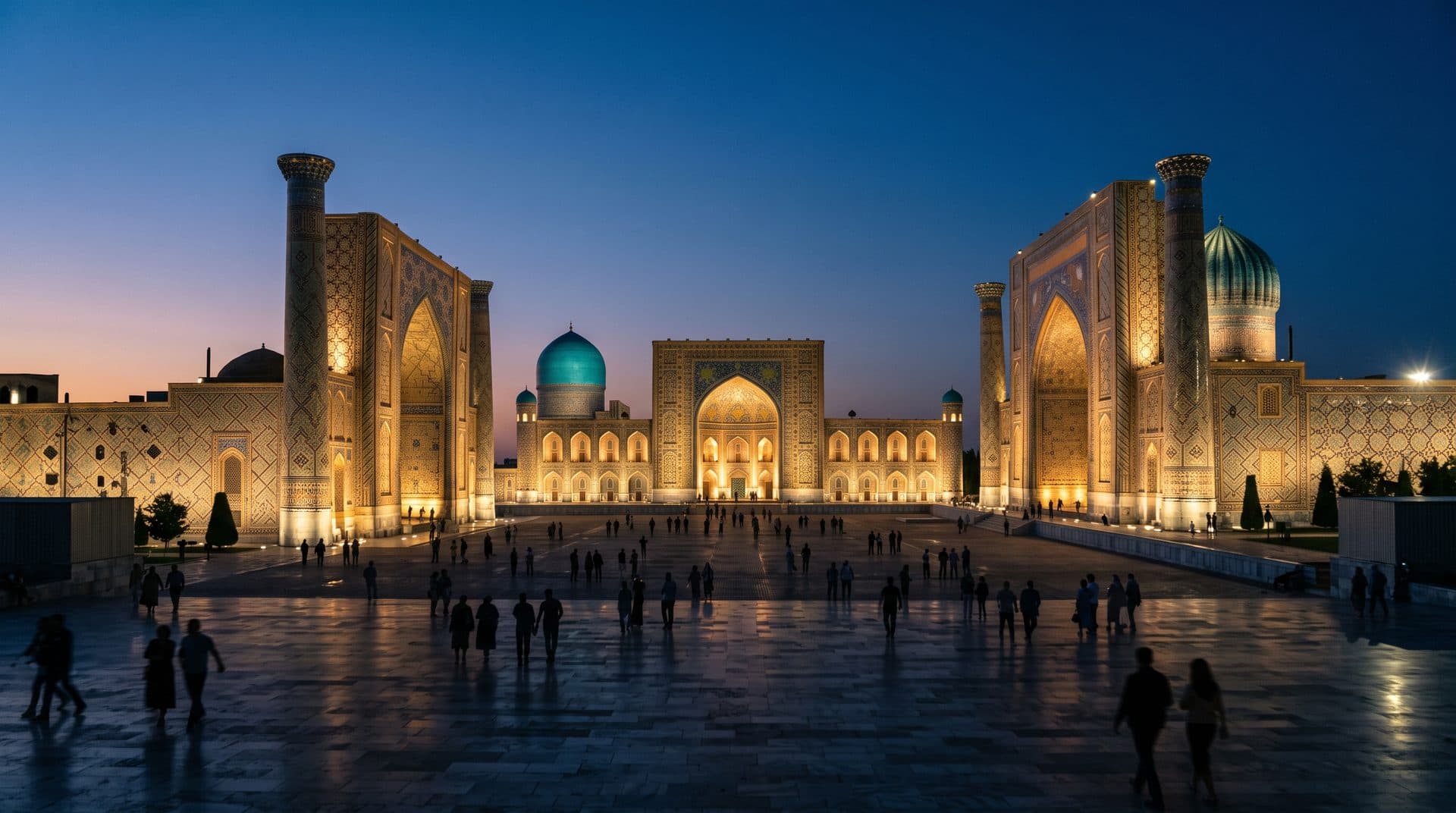
April to early June and September to October are the golden windows: 20–30°C, clear skies, melons (autumn) or roses (spring). July and August run 38–45°C in the cities and are for the committed. Winter is underrated — cold, often sunny, and you will have the Registan nearly alone.
The hospitality is not a performance
You will be offered tea by carpet sellers, invited to weddings by strangers, and handed bread through train windows. This is not a tourism strategy; it predates tourism by roughly two millennia. Accept more than you decline and the country opens like a door.