14 July 2026 · 5 min read
The Registan after the buses leave
The world's most photographed square keeps its real self for the last hour of light. Notes on timing Samarkand.
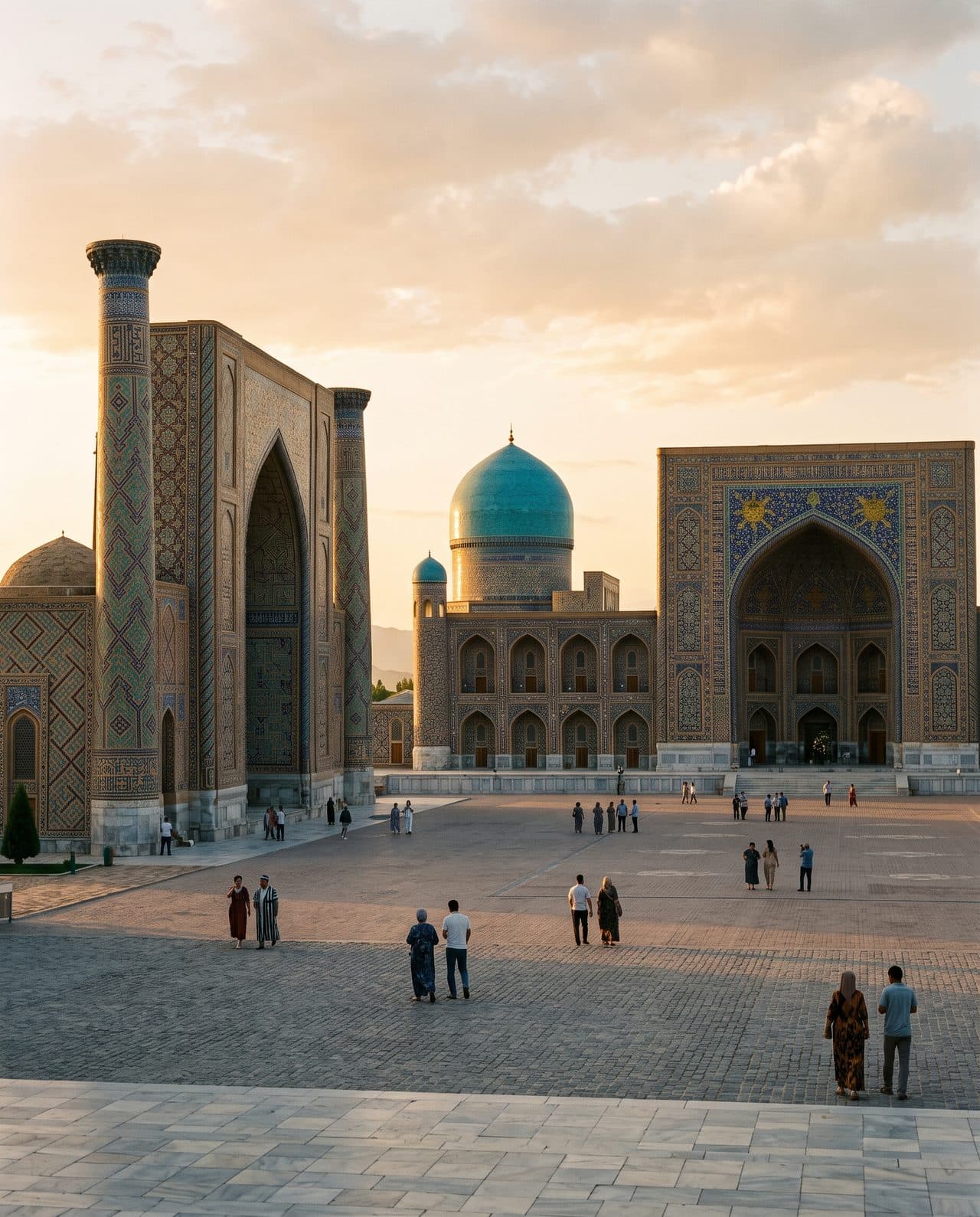
Every day at around four in the afternoon, the Registan exhales. The coach groups fold back into their itineraries, the flag-following crowds thin, and the square — which has spent the day as a backdrop — returns to being a place.
This is the hour it was designed for. The three madrasas face roughly west of south; as the sun drops, light rakes across the portal of Sher-Dor and its improbable tigers, and the ceramic surfaces stop reflecting and start glowing. The blues deepen. The gold ceiling of Tilya-Kori, lit for evening, becomes a held breath.
The two-visit rule
See the Registan twice and it becomes two different monuments. Come mid-morning for the craftsmanship — the tile mosaics resolve into individual cut pieces, the calligraphy bands become legible, the restoration seams appear. Then come back for the final ninety minutes of light and let the ensemble do what ensembles do. One ticket covers the day; almost nobody uses it twice. Be almost nobody.
Where to stand
The postcard is shot from the raised viewing platform on the square's open side — fine, take it. Then walk the diagonal: from the corner of Ulugbek's madrasa, the three portals stack into a single composition that no straight-on photograph achieves. Inside Sher-Dor's courtyard, the former student cells now hold craft workshops; the upper gallery, when open, is the quietest vantage in Samarkand.
After dark
The evening illumination is theatrical and worth one slow lap. Some nights a sound-and-light show plays for tour groups — skip the bleachers, stand at the square's far edge, and take the colors with the volume of the city instead. Then walk ten minutes to a chaikhana, order green tea, and check tomorrow's opening time. You already know you're going back.