Hazrati Imam complex
The city's spiritual heart: madrasas, mausoleums and the library holding the 7th-century Uthman Quran, written on deerskin and still commanding a room.
Tip · Go at opening; the Quran room is small and tour groups arrive by ten.
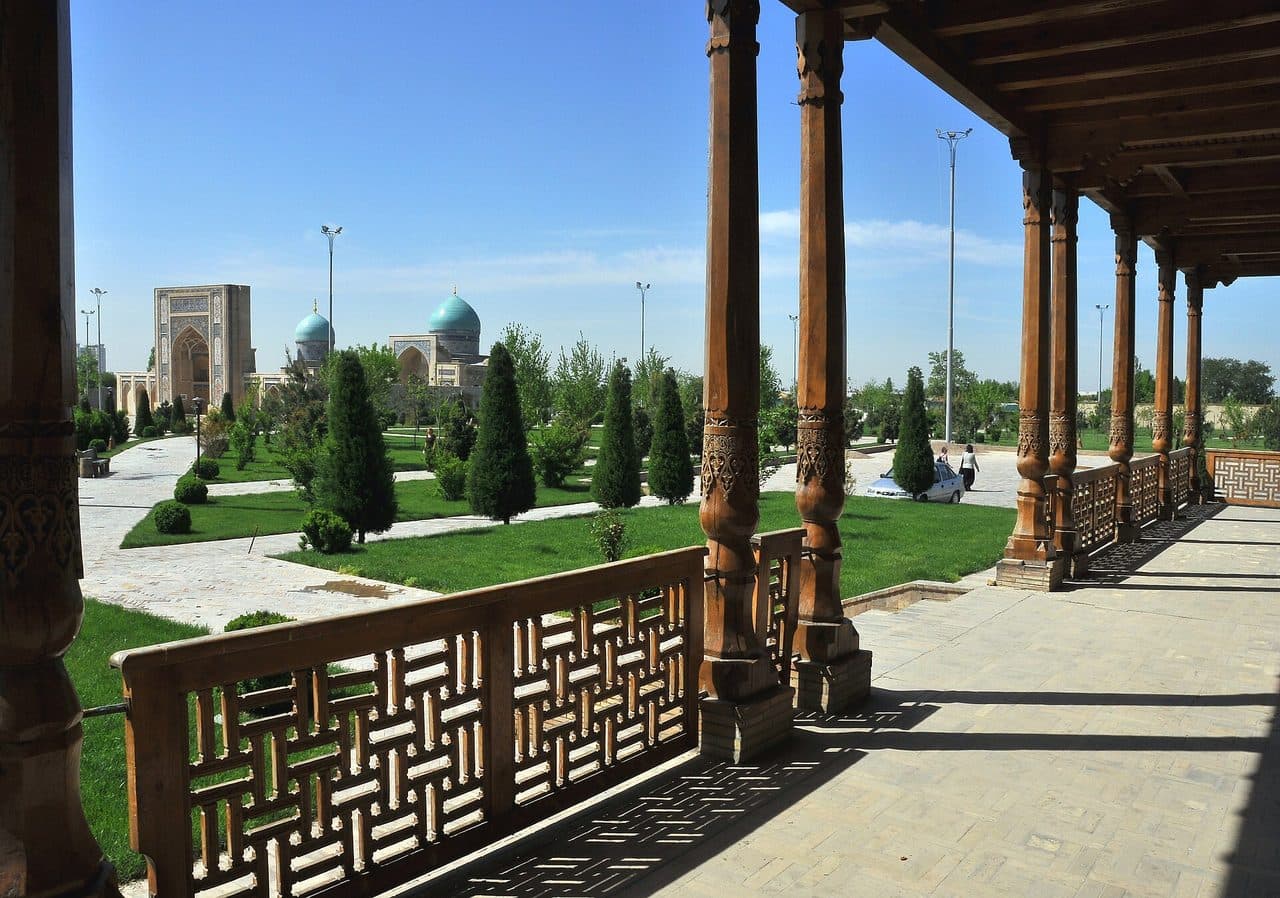
The capital, underrated
A green, generous city where every journey begins — and deserves a day of its own.
Photo: LBM1948, Wikimedia Commons, CC BY-SA 4.0
Travelers treat Tashkent as a runway: land, sleep, catch the morning train west. Understandable — and a mistake. Central Asia's largest city is where modern Uzbekistan actually lives, and it repays a day of honest attention.
The 1966 earthquake leveled much of the old town, and what rose afterwards is a museum of Soviet modernism at its most confident — vast squares, mosaicked facades, and a metro so ornate its stations were classified as military installations until 2018. You could photograph nothing but ceilings here and leave satisfied.
But old Tashkent survives in patches, and the patches are superb: the Hazrati Imam complex with its Quran of Caliph Uthman — one of the oldest in existence — the mud-walled lanes around it, and Chorsu bazaar under its great turquoise dome, where the city has traded for centuries and shows no sign of stopping.
Worth your hours
The city's spiritual heart: madrasas, mausoleums and the library holding the 7th-century Uthman Quran, written on deerskin and still commanding a room.
Tip · Go at opening; the Quran room is small and tour groups arrive by ten.
Cosmonaut mosaics at Kosmonavtlar, chandeliers at Alisher Navoi, cotton-flower ceilings at Paxtakor — the world's most beautiful public transport, fare about 15 cents.
Tip · Ride the line, not to a destination. Photography has been legal since 2018.
The domed food hall is the city's pantry: dried apricots, horse sausage, mountains of spice, and the best people-watching in the capital.
Tip · The plov row behind the dome serves from noon; follow the queues.
A merchant's house turned jewel box — ganch carving, suzani, Rishtan ceramics — the vocabulary lesson for everything you'll see on the road.
Tip · An hour here before the valley or the west makes every workshop visit richer.
The city's parade axis: the Timur statue, the chiming clocktowers, and the plane-tree promenade where artists sell canvases at dusk.
Tip · Evening is the hour — the fountains run and half the city strolls.
The capital is building fast — parks, towers, an opera of fountains. Kitsch in places, but the energy is real and very Uzbek.
Tip · Skippable on a short trip; interesting if you want to argue about architecture.
At the table
The practical truths